
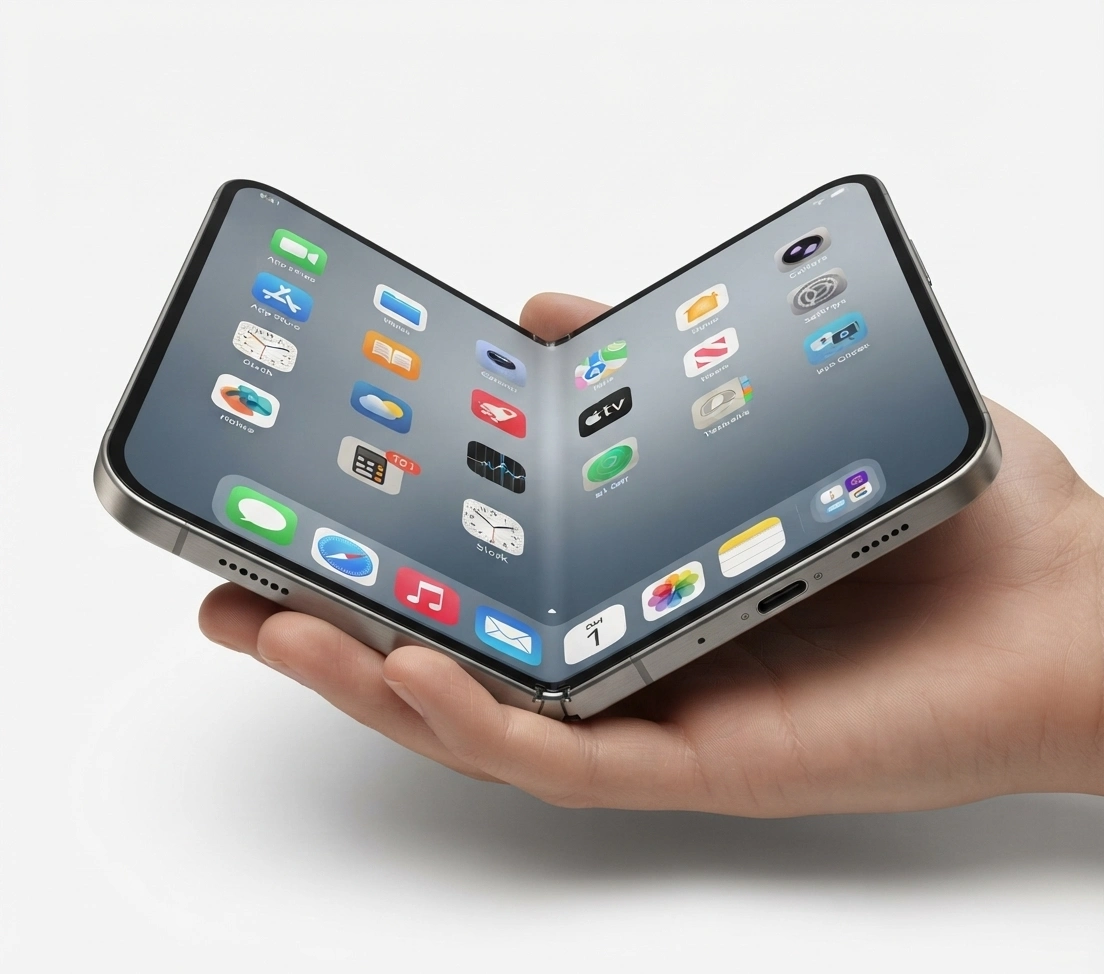
Apple iPhone Fold: what it could mean for repairs
Apple has not confirmed a foldable iPhone. Reports and supply-chain leaks keep circulating, and industry analysts continue to expect Apple to enter the foldable market at some point, aiming the device at buyers who already own a Samsung Galaxy Z Fold or a Google Pixel Fold.
Buyers naturally focus on design, features and price first. Repair cost deserves equal attention, particularly given what current foldable owners already pay to fix a cracked inner display or a failing hinge. No confirmed iPhone Fold exists to examine. Existing foldable phones, however, offer a working template for what Apple's version might cost to repair.
A Foldable iPhone Would Not Behave Like a Standard iPhone
A conventional iPhone uses a rigid display, a fixed chassis and no moving hinge. Three new sources of complexity would arrive with a foldable model: a flexible screen, a mechanical hinge and a chassis built to accommodate both.
The flexible inner display represents the biggest departure from Apple's current line-up. Standard iPhones use rigid glass panels. A foldable display must bend repeatedly across its lifespan without losing image quality or touch response, which places far greater demand on the materials and the assembly process. Replacing a damaged unit would likely involve more careful handling than a standard screen swap, and the part itself would sit at the expensive end of Apple's component list.
A hinge introduces a second category of risk. Apple has not indicated whether it would license an existing hinge design or engineer something new, but any moving mechanism adds parts that do not exist inside a standard iPhone at all.
What Current Foldables Already Cost to Repair
Rather than guess at Apple's future pricing, it helps to look at what Samsung and Google currently charge UK customers for foldable repairs. These figures, gathered from independent UK repair specialists during 2026, give a useful proxy for where an iPhone Fold repair might land.
- Samsung Galaxy Z Fold (inner display) – Typical UK independent repair: £500–£600; Samsung out-of-warranty: up to £525–£599; Why it costs more: flexible AMOLED panel plus ultra-thin glass layer, sold as one assembly with the hinge frame
- Samsung Galaxy Z Fold (outer/cover display) – Typical UK independent repair: £129–£199; Samsung out-of-warranty: not separately listed; Why it costs more: uses conventional rigid AMOLED, so pricing sits closer to a standard flagship screen
- Samsung Galaxy Z Flip (inner display) – Typical UK independent repair: £299–£340; Samsung out-of-warranty: £319.95 upward; Why it costs more: same flexible-panel principle on a smaller display
- Google Pixel Fold (inner display) – Typical UK independent repair: genuine part alone lists near £710, pushing full repair quotes toward £850–£1,000+; Google: handled through Google Store repair partners, priced per device; Why it costs more: small production volume, limited UK parts network, larger single-panel assembly
A standard iPhone screen repair, by comparison, typically runs somewhere between £100 and £350 depending on the model, according to most UK independent repair pricing. The gap between that figure and what Samsung or Google charge for a foldable inner display is not small. If Apple's foldable follows a similar cost structure, and there is no obvious reason it would not, a first-generation iPhone Fold screen repair could plausibly sit in the £500–£900 range once Apple's typical pricing premium is factored in. Not sure what a repair like this would mean for your budget, or wondering whether your current iPhone is worth repairing instead of replacing? Speak to the team at JD Phones before you make a decision either way. A quick diagnostic conversation costs nothing and can save considerable money down the line.
Why the Hinge Could Become Its Own Repair Category
The hinge deserves separate consideration from the screen. Foldable hinges are engineered to survive hundreds of thousands of open-close cycles, yet they remain mechanical assemblies, and mechanical assemblies wear. Dust, grit, impact and simple age can all affect how smoothly a hinge operates over time.
A hinge fault rarely presents as an isolated problem. The hinge sits directly against the flexible display and the surrounding internal components on most current foldables, so diagnosing the actual source of a fault, rather than simply replacing the part that looks damaged, becomes important. Technicians without specific foldable training sometimes swap components that were never faulty, because the symptoms of a hinge issue and a display issue can look similar from the outside. This is one reason specialist experience with foldables tends to matter more than it does for a standard iPhone.
Is a Foldable Screen Crease a Sign of Damage?
Anyone new to foldables should understand one thing before buying: a visible crease along the fold line is not automatically a fault. It is a structural consequence of using a flexible panel that must bend thousands of times.
A slight crease, or a shift in how light reflects off that section of the display, falls within normal operation for this technology. Samsung and independent UK service data confirm as much; a freshly replaced genuine screen on a Z Fold still shows a crease from day one, because the crease is part of the panel's construction rather than a sign of prior damage.
A different picture applies to rapid changes. A crease that worsens quickly, dead pixels, flickering, or a loss of touch response along the fold line point toward an actual fault, and any of those symptoms warrants a professional assessment rather than a wait-and-see approach.
Apple's Potential Advantage
Apple would not enter the foldable category as the first company to attempt it. Samsung has spent several hardware generations refining its Fold and Flip lines, and Google has gone through its own iteration with the Pixel Fold and Pixel 9 Pro Fold. Both companies have already worked through hinge failures, crease complaints and parts-supply problems in public.
Apple could draw on that accumulated experience before its own device reaches customers, which might translate into a more mature product at launch compared with Samsung's early Fold generations. Apple's approach would still be new to Apple's own repair network, though, so UK repair shops would need real hands-on time with actual units before pricing and turnaround times settle into something predictable. That gap, based on how long it took independent shops to catch up with Samsung's early Fold models, could run anywhere from six months to two years.
How Repair Costs Might Change Over the First Few Years
Early repair pricing tends to run high when a device launches with limited parts availability and no established independent repair network. Samsung's own history illustrates the pattern: Z Fold parts were scarce and expensive when the original model launched in 2019, whereas today, six generations later, multiple UK specialists stock genuine parts and quote fixed prices without a lengthy wait.
The same trajectory would likely apply to an iPhone Fold. Parts would become easier to source as sales volume grew, and independent technicians would build up the specific skills the device demands. None of this guarantees rapid price drops. Samsung's Z Fold 7 inner screen still lists at roughly £599 through specialist repairers seven generations into the product line, which suggests foldable repair costs settle at a permanently higher tier rather than falling toward standard smartphone pricing over time.
Buyers planning to keep an iPhone Fold for several years should weigh the first-generation repair cost separately from what the same repair might cost in year three or four. They will not necessarily be the same figure, and the gap could run in either direction depending on how quickly Apple's parts network matures.
Is an iPhone Fold Worth the Repair Risk?
The answer depends on Apple's eventual design, its pricing and the repair infrastructure it builds around the device.
Treating a first-generation iPhone Fold as a premium purchase with correspondingly premium repair costs is a sensible starting position, based on how every other foldable manufacturer has priced its own first few years. A cracked inner display or a failed hinge would likely cost considerably more to fix than the equivalent problem on a standard iPhone.
None of this makes a foldable a poor purchase by default. It does mean the repair cost belongs in the same conversation as the purchase price, any available insurance, warranty terms and how long the buyer plans to keep the device.
iPhone Fold Repairs at JD Phones
At JD Phones, diagnosis comes before assumption. As new Apple devices reach the market, our technicians examine the specific fault, walk customers through the realistic repair options and provide a firm quote before any work begins.
Thinking about upgrading your iPhone, or concerned about what a future repair might cost? Contact JD Phones in Newcastle, Sunderland or Heaton, or use our UK-wide mail-in repair service for a proper diagnosis, honest repair advice and a solution that actually fits your device.
Frequently asked questions
Has Apple officially confirmed the iPhone Fold?
No. Everything currently available comes from reports, leaks and industry speculation. Design, specifications, launch timing and repair costs should be treated as unconfirmed until Apple makes an official statement.
Would an iPhone Fold cost more to repair than a standard iPhone?
Almost certainly. Samsung and Google both charge several hundred pounds more for a foldable inner-display repair than for a standard flagship screen, largely because of the flexible panel and hinge assembly. Apple's exact pricing would depend on its final design and its component costs.
Is a screen crease a sign of damage?
Not on its own. A visible crease is a normal characteristic of flexible OLED technology and becomes more noticeable with regular use. A rapidly worsening crease, dead pixels, flickering or loss of touch response is different, and any of these should be checked by a technician.
Could parts be hard to find right after launch?
Likely, at least initially. New devices commonly face limited third-party parts availability in their first months. A first-generation Apple foldable would introduce an entirely new repair category to Apple's ecosystem, which could extend that supply gap further than usual.
Would Apple have to provide spare parts for seven years?
UK repairability regulations require manufacturers to supply certain spare parts for defined periods, though exact requirements vary by product category and component. Buyers should check Apple's official support information for the specific model once one exists.
Should I buy an iPhone Fold as soon as it launches?
That depends on priorities. Buyers who want Apple's newest technology and can accept higher early repair costs may find a first-generation device appealing. Buyers most concerned about long-term reliability and repair pricing may prefer to wait for real-world durability data before committing.
Where should I get a foldable iPhone repaired?
Choose a provider with genuine foldable repair experience, and ask what parts they use, what warranty applies and whether the hinge gets inspected alongside the display. A proper diagnostic matters more with foldables than with standard phones, because visible damage rarely tells the full story of what has gone wrong internally.
Repair decisions are easier with the right diagnosis
The right repair starts with a clear diagnosis. If your device is cracked, draining quickly, not charging, overheating, water damaged, or simply unreliable, JD Phones can inspect it, explain your options, and help you choose the repair that makes sense.